What if your next power tool came from the library instead of a store?
Libraries of Things lend access to useful objects. The interesting part is the maintenance, teaching and community connections behind the shelf.
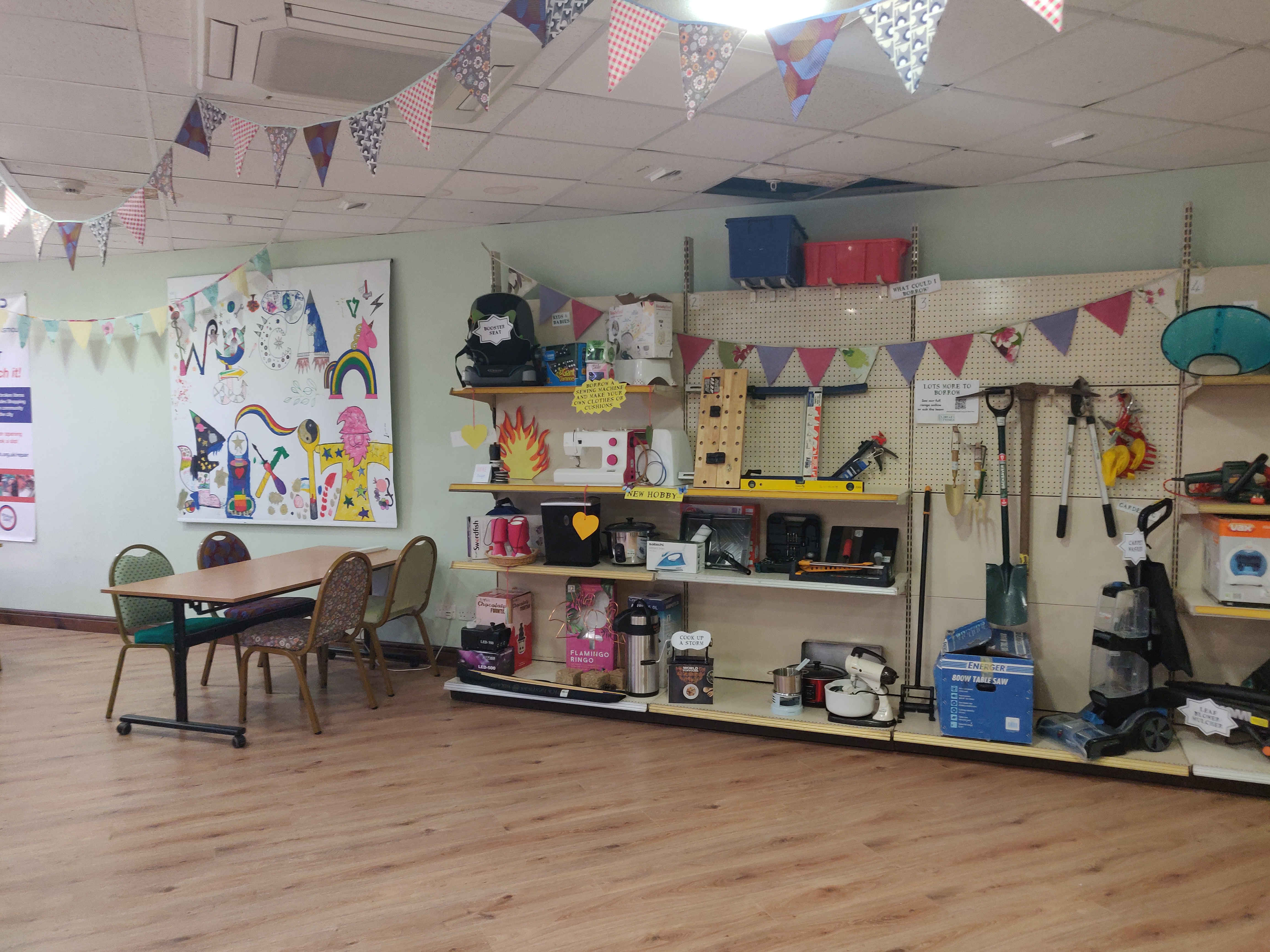

A power drill spends much of its life in a closet. So does the specialty cake pan, a folding projector screen, a telescope and the tool someone bought to repair one door. Each object is useful at the moment it is needed; ownership is not always the most efficient way to get that usefulness. The surprising institution solving this problem is one we usually associate with books: the public library.
Libraries of Things lend physical objects instead of only printed or digital materials. The American Library Association's 2026 training on this model describes collections that may include home tools, education supplies, science equipment and event resources. The concept is more radical than an unusual catalog: it changes the relationship between people, property and public space.
FROM CHECKING OUT BOOKS TO CHECKING OUT CAPABILITY A library card already converts a shared collection into personal access. A Library of Things extends that logic from knowledge to action. Someone who needs a telescope for one night, a tool for one repair or a device to test before purchasing can participate without spending the full ownership price. The public asset serves many households.
The economics are not simply “free tools.” A shared inventory has acquisition costs, wear, breakage risk, staff handling time, storage needs, insurance questions and cleaning requirements. The description of ALA's forthcoming 2027 management handbook identifies cataloging, maintenance, lending policies, training and evaluation as central operational questions. The service is only sustainable when those invisible operational systems work.
A COMMUNITY NETWORK, NOT JUST A SHELF The most interesting consequence is social. A specialty item can become an event. A borrowed telescope can lead to a stargazing group. A sewing machine can connect a learner with a repair mentor. Event kits can reduce the cost of a neighborhood gathering. Lending the object is an invitation to people who know how to use it, maintain it or teach someone else.
That is the connection to Villager's mission. A platform that maps places and events could connect a library's borrowing catalog to the workshops, repair groups and clubs that make those items useful. A city becomes richer not only when new businesses open, but when existing resources become visible.
A REAL PHILADELPHIA EXAMPLE, WITH AN IMPORTANT DISTINCTION Philadelphia's Community Partnership Program lends cleanup tools and supplies for volunteer neighborhood work, including rakes, shovels and litter grabbers. It is not the same thing as claiming every Free Library branch has a general lending inventory. Instead it demonstrates a related design principle: public equipment can lower the threshold for a resident-led community project. The city's official program page describes eligibility, supply requests, pickup and return requirements; users should check current details there.
HOW TO RESEARCH WHAT YOUR AREA ALREADY HAS Start with one intended activity rather than a search for “third places.” Want to repair a bicycle, host a small concert or clean a vacant lot? Check public libraries, city programs, parks, schools, makerspaces and community groups for equipment, instruction and permission requirements. Confirm whether borrowing requires residence, a card, deposit, training or advance reservation. Then find an actual event or collaborator where skills can be exchanged.
THE MEASURE THAT REALLY MATTERS Count what became possible. Did a person learn a skill? Did a neighborhood complete a cleanup? Did someone try a craft before investing? Those are more meaningful community outcomes than catalog size alone.
A lending experiment with the full cost visible
Suppose a neighborhood is considering a small shared event kit. Before buying anything, list the actual uses requested by residents: a projector for a film night, folding equipment for a meeting, or tools for a cleanup. These are hypothetical examples, not items Villager currently lends. Find out what public programs already provide. The best new collection might fill one awkward gap rather than duplicate a service a few blocks away.
For each proposed item, estimate acquisition, storage, inspection, repair and replacement costs. Then add staff or volunteer handling time. If a hypothetical $120 item survives 24 completed loans, its purchase cost alone averages $5 per loan. That arithmetic says nothing yet about labor, missing parts, insurance or whether the loans created value. It also does not prove 24 separate purchases were avoided. Honest evaluation records use and outcomes without turning every checkout into an invented environmental saving.
Test access from the borrower's perspective. Can someone without a car carry the object home? Is training available in a usable format? Are deposits or identification requirements excluding the residents the collection was intended to serve? What happens when a repair takes an item out of circulation? A catalog can show many objects while only a few are usable at any moment. Availability, accessibility and dependable maintenance deserve as much attention as acquisition.
Now add the human layer to the map. Connect the equipment listing to the place it can be collected, the person or group offering instruction, and an actual event where it can be used. Keep permissions, opening times and lending terms attached to the responsible organization. Villager could help people discover those connections, but the lender still needs to confirm a reservation. This is a proposed network design, not an integrated booking system already running here. Its advantage would be reducing the distance between discovering a useful object and finding the knowledge, collaborators and permission needed to use it well.
Villager Open Network is building tools to discover the resources, places, organizations and gatherings that make shared local life possible. This article is an editorial proposal, not an announcement that Villager operates a lending program. Explore https://villager.villageropen.org for our developing community directory.
Read the original sources
American Library Association: create ↗ALA Editions: forthcoming management handbook: LoTs ↗City of Philadelphia: community partnership program ↗Sources checked October 26, 2026. Time-sensitive details should be checked again before acting.
Explore Villager Open Network's developing place and community directory.
Explore the community directory →